
The Silent Killer of Steel Bridges: How Micro-Fatigue Occurs and How Modern Fabricators Stop It

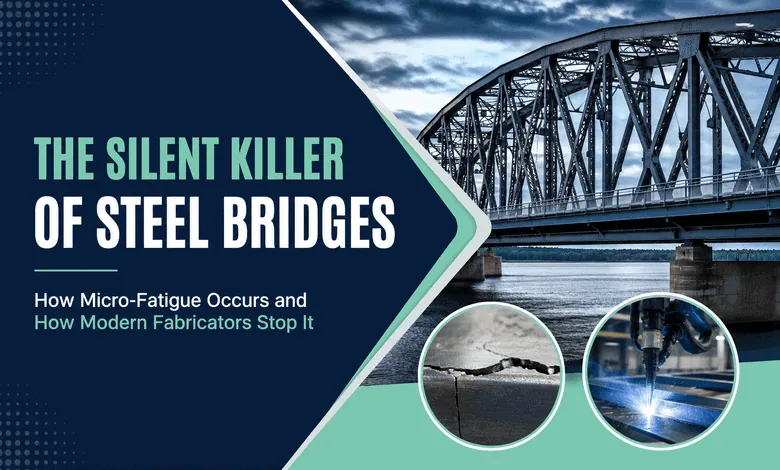
As a senior mechanical engineer with decades of experience in heavy structural engineering, I have spent countless hours inspecting and analyzing massive infrastructure projects. When most people look at a massive highway bridge, they see an immovable object. They assume that if a structure this large ever fails, it would take a catastrophic event like a massive earthquake or a record-breaking hurricane to bring it down.
However, the reality is much quieter and far more insidious. The most common threat to these massive structures is not a sudden impact. It is a slow, invisible process known as micro-fatigue.
Micro-fatigue is the silent killer of heavy infrastructure. It starts at a microscopic level, completely invisible to the naked eye. If left unchecked during the manufacturing process, these tiny imperfections can grow over decades and eventually threaten the structural integrity of the entire project. Fortunately, modern engineering and advanced fabrication techniques have evolved dramatically. Today, we have the technology to stop this silent killer before a structure ever leaves the manufacturing facility.
What is Micro-Fatigue in Structural Steel?
To understand how micro-fatigue works, you can try a very simple experiment at home. Take a standard metal paperclip and bend it back and forth. The first time you bend it, the metal feels strong. But as you continue to bend it back and forth in the exact same spot, the metal becomes weak and brittle. Eventually, it snaps completely in half.
This process is called cyclic loading. The exact same physical principles apply to heavy structural engineering.
A bridge experiences cyclic loading every single day. Every time a heavy commercial truck drives across the deck, the steel beams deflect slightly downward and then bounce back up. Wind currents push against the side panels, causing lateral stress. Furthermore, extreme temperature changes cause the metal to expand during the hot summer days and contract during freezing winter nights.
Over a span of fifty to one hundred years, these millions of tiny movements take a toll on the material. If there is a microscopic flaw in the metal, this constant cyclic loading will cause that flaw to slowly turn into a crack.
The Root Causes of Micro-Cracking
In the early days of infrastructure development, builders did not fully understand how microscopic flaws affected load-bearing capacity. Today, we know that cracks almost always start at a “stress concentration point.” These are specific areas where the physical stress of the bridge is multiplied due to a sudden change in the geometry of the metal.
Flaws in Early Welding Techniques
Historically, the most vulnerable areas of any large structure were the welded joints. When two massive steel plates are joined together, the welder melts the edges and adds a filler metal to fuse them. In older projects, manual welding often left behind tiny defects. Sometimes a small pocket of gas would get trapped in the molten metal, creating a microscopic void. Other times, a tiny piece of hardened slag would become embedded inside the joint.
Under heavy cyclic loading, the stress naturally gathers around these tiny internal voids. Over time, the metal grain structure begins to tear at the molecular level.
Poor Edge Preparation
Another major cause of micro-fatigue in older structures was poor cutting techniques. When builders used manual torches to cut thick metal plates, the edges were often rough and uneven. These jagged microscopic edges acted as perfect starting points for fatigue cracks.
How Modern Fabricators Stop Micro-Fatigue
The manufacturing process has completely transformed over the last few decades. We no longer rely on guesswork. When engineers design modern steel bridges, they partner with highly specialized fabricators who use strict quality control measures to eliminate stress concentration points. Here is exactly how modern facilities prevent micro-fatigue from occurring.
Advanced Material Selection
The fight against fatigue starts before a single cut is made. Modern fabricators use high-strength steel alloys that are specifically engineered for maximum toughness. Steel mills now use advanced refining processes to remove impurities like sulfur and phosphorus from the raw material. By starting with a pure, highly uniform base metal, fabricators ensure the material can handle decades of heavy cyclic loading without becoming brittle.
Precision Cutting and Beveling
As mentioned earlier, rough edges are a major liability. To solve this problem, modern fabricators use automated CNC plasma cutters and heavy-duty laser cutting machines. These computer-controlled machines slice through thick metal plates with absolute precision. The resulting edges are incredibly smooth.
Furthermore, fabricators use automated milling machines to create precise bevels on the edges of the metal before welding begins. This ensures the welding material can penetrate deeply and evenly, completely eliminating the dangerous gaps that cause internal stress.
Robotic Welding and Stress Relief
Manual welding is still an art form, but for massive, repetitive joints, human error is a risk we cannot afford. Top-tier bridge fabricators now use automated Submerged Arc Welding machines. These robotic systems travel along the joints at a perfectly consistent speed. They maintain an exact temperature and deposit the perfect amount of filler metal every single time. This eliminates the trapped gas pockets and slag inclusions that plagued older infrastructure.
Additionally, welding generates extreme heat, which can warp the surrounding metal and lock internal stress inside the beam. To combat this, fabricators use Post-Weld Heat Treatment. They slowly heat the completed component in a massive oven and then let it cool at a strictly controlled rate. This relaxes the molecular structure of the metal, resetting it to a neutral state and greatly extending its fatigue life.
The Role of Non-Destructive Testing
Even with the best automated equipment, a senior mechanical engineer must verify that the finished product is absolutely flawless. We do this through Non-Destructive Testing, commonly known as NDT. This is a series of scientific testing methods that allow inspectors to look deep inside solid metal without damaging it.
Phased Array Ultrasonic Testing
This is one of the most powerful tools in our industry. An inspector runs a specialized probe over the welded joint. The probe sends high-frequency sound waves deep into the metal. If the sound waves hit a solid, uniform piece of metal, they bounce back normally. But if the sound waves hit a microscopic crack or a tiny pocket of trapped gas, the computer instantly detects the flaw. It provides a real-time, three-dimensional image of the internal defect.
Radiographic Testing
For critical joints that bear the heaviest loads, fabricators use industrial X-rays. Just like a doctor takes an X-ray to look for a fractured bone, engineers use powerful radiation to capture a picture of the internal weld structure. If there is even a millimeter of incomplete fusion, the X-ray film will reveal it. The fabricator can then grind out the tiny defect and reweld the area perfectly before the beam ever leaves the shop.
The Economic Impact of Quality Fabrication
Building heavy infrastructure requires a massive financial investment from cities, states, and private organizations. The goal is never to build a structure that just survives for a decade. The goal is to build a heavy-duty transportation network that functions safely for a century or more.
When a structure suffers from premature fatigue cracking, the repair costs are astronomical. Engineers have to shut down traffic, erect temporary scaffolding, and attempt to weld repairs high up in the air under difficult weather conditions. It is incredibly expensive and highly disruptive to the local economy.
This is why the initial fabrication stage is the most important part of the entire construction process, as effective manufacturing processes help prevent costly structural defects before installation. By investing in high-quality manufacturing upfront, project managers save millions of dollars in future maintenance costs.
Conclusion
Micro-fatigue will always be a law of physics. As long as heavy trucks drive over metal structures, cyclic loading will occur. However, micro-fatigue no longer has to be a structural death sentence.
Through the rigorous application of modern material science, computer-controlled machining, robotic welding, and advanced ultrasonic testing, the heavy structural engineering industry has mastered the art of building fatigue-resistant infrastructure. The secret to long-lasting public safety does not just happen on the construction site. It happens on the factory floor, where expert fabricators turn raw metal into reliable, flawless components that will safely carry millions of people for generations to come.

