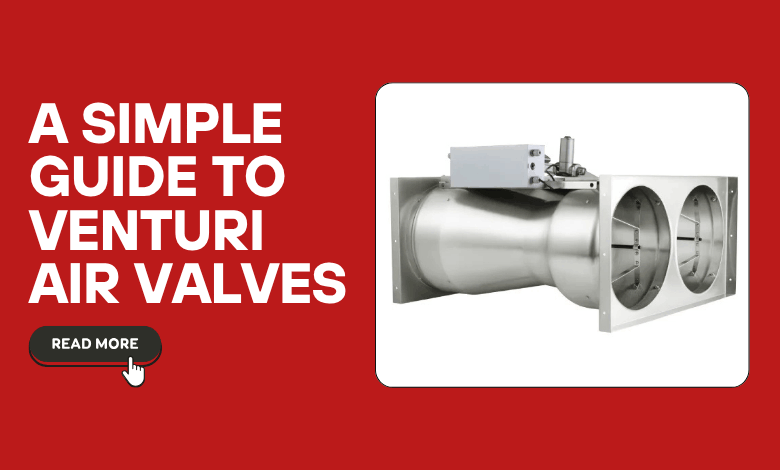
Once a venturi air valve is set, it basically does the rest. This is a huge benefit for areas where airflow doesn’t move, like medical facilities or cleanrooms. The valve keeps things steady without much intervention.
A lab or hospital room might seem still, almost quiet in a way. But the air isn’t. It’s moving constantly behind the scenes. It has to stay steady. Even a small variation can start creating issues in the background.
That’s where venturi valves come into play. In contrast to a typical airflow control valve, it does not rely on complicated electronic systems or constant calibration. It reacts rapidly and can adjust by itself.
Modern HVAC systems require more than basic airflow. They require precision, reliability, and consistency. Engineers and facility managers now look for solutions that can maintain balance without constant supervision.
Let’s break down how this valve works and why it has become a preferred choice in many critical environments.
What Is a Venturi Valve?
A Venturi air valve is a mechanical device that regulates the flow of air by adjusting pressure within a tube that is specially designed. It is not dependent on conventional dampers or sophisticated sensors. Instead, it uses physics to maintain steady airflow.
In simple terms, the valve narrows at one point. As air passes through this narrow section, its speed increases and pressure drop. This change allows the system to regulate airflow automatically.
The Basic Concept Behind It
This works on the Venturi effect. As air passes through a constrained space, the velocity increases as pressure falls. That pressure difference helps the valve measure and control airflow.
You don’t need complicated electronics to make it work. The design itself does most of the job.
Where It Fits in HVAC Systems
You’ll often see an HVAC venturi valve in places where airflow needs tight control. Labs, hospitals, and cleanrooms rely on it. Compared to a variable air volume valve, it reacts faster and stays more stable under changing conditions.
How Does a Venturi Air Valve Work?
A venturi valve controls airflow by combining smart design with real-time pressure response. It doesn’t just push air through. It continuously adjusts based on system conditions.
Step-by-Step Working Process
- Air enters the valve
- It moves through a narrow throat section
- Velocity increases as the space tightens
- Pressure drops in that section
- The system senses this pressure change
- The valve adjusts to maintain the desired airflow
This process happens almost instantly. That’s why the system feels stable even when conditions change.
Why It Doesn’t Need Constant Adjustment
This valve acts like a pressure independent valve. It maintains airflow regardless of the fact that the pressure inside the duct changes.
It doesn’t require recalibrating frequently. It reduces labor-intensive tasks and enhances the reliability of your system over time.
What Make It Different
Not all airflow systems behave the same. A venturi valve stands out because it responds quickly and accurately.
- Fast response time: It reacts in seconds.
- High accuracy: It maintains precise airflow levels without constant tuning.
- Low maintenance: Less moving parts means lower damage and wear.
Compared to a standard airflow control valve, this design offers more stability. It also works as a pressure independent valve, which means it handles pressure fluctuations without losing performance.
Venturi Air Valve vs Traditional VAV Systems
Many facilities still use a variable air volume valve, also known as VAV systems. These systems work with limitations.
- Accuracy and Performance: A variable air volume valve depends on sensors and actuators. It takes time to respond to changes. An HVAC venturi valve, on the other hand, reacts almost instantly. It doesn’t wait for signals to adjust. The airflow is constant, even if the pressure of the system changes.
- Maintenance and Durability: Traditional VAV systems need regular calibration. Sensors drift. Components wear out. A venturi air valve requires less attention. Its mechanical design reduces dependency on electronics, which extends its lifespan.
If you’ve dealt with frequent recalibration issues, this difference becomes obvious pretty quickly.
Common Applications You Should Know
You’ll find a venturi air valve in environments where airflow isn’t just about comfort. It’s about safety and precision.
- Laboratories: Keeps airflow stable
- Hospitals: Maintain clean air
- Industrial spaces: Control ventilation
- Cleanrooms: Ensure strict air quality standards
An HVAC venturi valve works well in these settings because it handles sudden changes without losing control.
Benefits of Using a Venturi Valve
Once you start using it day to day, the difference becomes easier to notice. It’s not just about features on paper. That’s where you start to see the actual value.
- Energy efficiency: The system does not overcompensate; however, reduces energy consumption.
- Reliability: It performs consistently without frequent adjustments
- Safety: Stable airflow protects sensitive environments
Compared to a traditional airflow control valve, this system gives better control with less effort. Because it’s a pressure independent valve, it maintains balance when conditions change.
Things to Consider Before Choosing a Venturi Valve
While choosing a venturi air valve, it is good to look around and examine your equipment.
- Application type: Labs and hospitals benefit more than standard office spaces
- System requirements: Check airflow range, pressure conditions, and design needs
- Budget: Initial cost may be higher but long-term savings often balance it out
Conclusion
Controlling airflow doesn’t receive any attention until there’s a problem. This is when the importance of an efficient system is evident.
A venturi air valve is an easy and efficient solution to keep precise airflow. It helps reduce manual work while increasing safety and helps keep systems operating smoothly.
For facility managers and engineers, it’s more than just technological advancements. It’s about reliability and security. Solutions like those of EB Air Control reflect how the latest HVAC design is advancing towards intelligent, reliable systems.
FAQs
What is a venturi air valve and why is it used?
A venturi air valve regulates airflow by generating pressure variations in a narrow space. It is used in HVAC equipment where precision of airflow is important, for instance hospitals and labs. It helps in maintaining stable temperatures that do not require constant manual adjustment.
How does a venturi air valve work in HVAC systems?
If you’ve ever wondered how the venturi valve function, it is based on the speed of airflow and pressure fluctuations. While air moves through the narrow area, speed increases and pressure decreases. The system uses this change to regulate airflow automatically and maintain balance.
Is a venturi valve better than a variable air volume valve?
A variable air volume valve works well for general use, but it needs more maintenance and calibration. A venturi valve responds faster and stays accurate even with pressure changes, which makes it better for critical environments.
Where are venturi air valves commonly installed?
These systems are commonly utilized in hospitals, laboratories, as well as cleanrooms and factories. The airflow in these areas must be stable to ensure safety and efficiency. However, venturi-based systems are an ideal choice.
Does a venturi valve require regular maintenance?
Not much. Its design minimizes the dependence of electronics and sensors. In contrast to traditional devices, this one doesn’t need periodic calibration, which reduces the cost of maintenance as time passes.