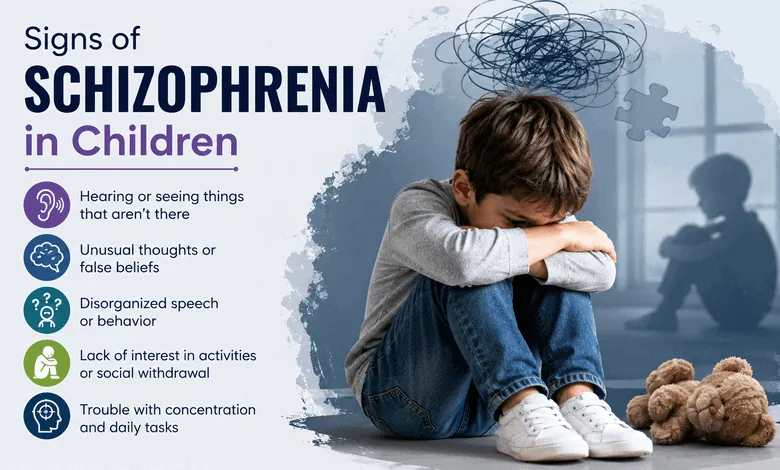
Schizophrenia is a rare, complicated neurological disorder that disturbs the way people think, sense, and act. The peak age for this complex mental health disorder is the late teenage years or early adulthood, whereas in some rare cases, children younger than 13 may show signs.
However, children generally have very vivid and creative imaginations. They may talk about made-up imaginative stories due to watching a movie or the news. Sometimes, these signs are normal in the early years. In such situations, only a complete, comprehensive examination by a qualified health professional, such as a board-certified child psychiatrist, can provide an accurate report. The positive news is that schizophrenia is a treatable disease, no matter what age it occurs. Let us understand some of the common signs of schizophrenia in children.
Facts about schizophrenia
According to some people, schizophrenia implies having multiple characters, but this is not true at all. “Schizophrenia” is the word that means “split mind,” but it does not refer to several characters, rather just the split from reality.
Key points about schizophrenia:
- Schizophrenia is a brain disorder, not a parenting flaw. The disease affects about 1 out of every 100 people around the world
- The most common symptoms are seen in the late teenage years to early thirties. It affects males and females equally, so this is a condition that can happen to anybody
- Early, careful assessment by a child specialist, aka a board-certified schizophrenia psychiatrist, is crucial. The treatment plan includes medication, therapy, school plans, and family support.
Kinds of schizophrenia
Schizophrenia can manifest in children in different ways, which are classified into three types that are:
- Hallucinations: In this, children may hear, see, or even feel things that do not exist. For example, a child holding a conversation with something not there (like talking to his robot friend) that cannot be heard by others.
- Delusions: Delusions are mistaken thoughts based upon unreal grounds. For example, a child may be obsessed with ‘somebody is always watching me’.
- Disorganized behavior: This includes not planning their day in an organized manner, not completing tasks, or exhibiting weird and inconsistent movements.
All these signs affect the child’s thought process, making it difficult for them to concentrate and thus, to remember or make decisions. These difficulties with attention often highly impact on their homework, social interaction, or communication.
Empowering parents with knowledge
Knowing what signs to watch for is just the first step. Here’s the checklist for parents on how to go through this difficult moment:
Early changes families may notice
- Quieter than before (stays in the room)
- Less interest in playing or hobbies
- Schoolwork becomes less of a priority
- Sleep continues to change, either sleeping late or too much
- Increased worry/stress/fearfulness (e.g., check windows constantly)
- Not looking after oneself much, e.g., washing, wearing clothes
Key signs to look for:
- Hears voices that others do not hear
- Sees things that are not visible to other aka do not exist in reality
- Having false beliefs (e.g., someone spying)
- Communication difficulty, i.e., jumps from topic to topic
- Moving the body in strange or rigid ways (e.g., movement when someone is tingling)
- Sitting for lengthy periods in one place
Signs that look like low energy:
- Fewer smiles, expressionless face
- Little or no communication or terse conversing
- Poor drive to start tasks (efforts stop after the first step)
- Lost interest in previously enjoyed activities
- Having apathy and keeping a distance away from their peers and family
How this may look at home and school:
- Sometimes the child covers his/her ears while communicating or during a teaching session
- The child is seen to be dozing off in class
- Out of the blue, he/she replies with something irrelevant in class
Why is it hard sometimes to spot the clear signs of schizophrenia in children?
The first signs of schizophrenia in children can be confused with normal play or a language disorder in some children, due to:
- As mentioned above, many children imagine or pretend a lot of things while playing.
- Many children often cannot describe how they think and feel
- Some symptoms of schizophrenia often seem similar to or overlap with other medical conditions, like ADHD, autism, or severe mood swings.
- Some signs are imitated from other sources, like stress, grief, bullying, or troubled sleep
How does schizophrenia differ from other conditions?
- In bipolar disorder, voices or beliefs occur only during the high and low mood shifts.
- In autism spectrum disorder, the core challenges are social, communication, and behavioral.
- In ADHD, attention and hyperactivity are the main problems.
In such types of conditions, there are often no psychotic symptoms present. Studies show that people with schizophrenia have a more inhibited temperament, which is significantly associated with co-morbid anxiety disorders, so for better psychiatric care of the individual, anxiety treatments, such as anti-anxiety pills or psychotherapy, are often included alongside treatment for schizophrenia.
What can help the family help the child with schizophrenia?
- A calm, peaceful, and kind attitude. Fear hinders and makes things worse.
- Seek professional help, such as a child psychiatrist, to have an in-depth mental health exam.
- Encourage your child to follow their treatment plan, such as taking prescribed medication on time (especially at lunch or during camp if necessary) and attending therapy sessions as planned.
- Follow up with a child psychiatrist. Note that a mental health check-up is as important as a regular physical check-up.
- Both school reports and observations from home should be shared.
- Keeping up with a regular daily pattern of sleeping, eating, and learning
- Limiting screen time, especially around sleep time.
- Make the home environment relaxing. Diminish the noise and clutter in the house.
- Praise short wins (dressed, one time of homework)
- Set a quiet time daily for activities like drawing, music, and puzzle games
- Keeping a simple record
How to track what is happening?
1. Use a small diary every day:
- Write down any voices, visions, and severe convictions (not detailed). For example, date, time, place, and what happened were written in.
- Note sleep hours and quality.
- Keep track of the mood: happy, sad, afraid, or angry.
- Write down any voices, visions, and unyielding convictions (not detailed).
- Length of the event, triggers, and what helped. Note those down.
2. Review the journal with the child psychiatrist, who will help with treatment adjustments if needed.
Working with the school
Teachers and parents sharing information from both sides is very helpful for a child with schizophrenia. Information, such as:
- Stay in touch and update with your child’s teacher
- Ask for easy instructions and support (e.g., seat change, extra time)
- Request shorter assignments and the possibility for added time.
- Ensure a serene space for the breaks.
Simple self-care that supports care
- Maintain a regular and steady daily life, including mealtimes and sleep/wakeup time
- Eating the right proportion of food and drinking water throughout the day.
- Every day homework becomes interesting with short outdoor time or gentle physical activities (a short walk).
- Practicing quiet moments and slow breathing pauses
- Being involved in some activities, such as drawing and music, helps them de-stress
- Limiting the use of caffeine drinks as it disrupts sleep, causing anxiety.
The Takeaway
Childhood schizophrenia is not common, and it is very complex, but many children get better through consistent care, school support, skills practice, and stay on track with a treatment plan. Parents should not be blamed. Children should not be blamed. With empathy, patience, and teamwork with professionals, daily life can feel safer. Each calm morning, finished task, and shared laugh is real progress. Step by step, children can grow, learn, and feel more secure in their world.
Now, with modern technology, telepsychiatry has made it easier to achieve clarity through diagnosis and receiving treatment for any mental health issues, and to monitor treatment plans. Online psychiatric care platforms like GABA Telepsychiatry offer 24/7 psychiatric care, making mental health care easier.
Remember, just as a house needs a strong foundation, a child needs a good mental state, which is a big part of the foundation of a growing mind. Schizophrenia or another mental health diagnosis does not mean a person is incapable of living well. With appropriate treatment, countless children with these challenges, including schizophrenia, are doing well in their daily lives and careers.